Learn how to earn money by marketing between vendors and brands in 2025. Build income as a middleman marketer with simple, profitable steps.
1. Introduction: The Power of the Partnership Broker
In today’s fast-paced digital economy, many incredible products never reach their full potential simply because their creators (vendors) lack the marketing savvy or connections to reach established market players (brands). Conversely, brands are constantly on the hunt for innovative, reliable products to keep their offerings fresh and competitive. This is where you come in.

As a middleman marketer, you act as the essential bridge, facilitating connections that benefit both parties. This model is rapidly gaining traction in 2025, driven by several key factors:
- E-commerce Expansion: The continued growth of online retail platforms means more products need to be sourced and sold.
- Social Media & Influencer Marketing: The power of direct-to-consumer sales channels often starts with a compelling product, which needs to be found.
- Demand for Niche & Unique Products: Consumers are moving away from mass-produced items, seeking out specialty goods often provided by smaller vendors.
This guide promises to demystify this process, showing you precisely how to earn money by marketing between vendors and brands and build a thriving business from these symbiotic relationships.

2. Understanding the Relationship Between Vendors and Brands
Before you can effectively market between these two entities, you need a solid grasp of who they are and why their relationship is mutually beneficial.
- Who are Vendors?
Vendors are the creators, producers, or primary suppliers of products. They can range from:
- Local Artisans & Manufacturers: Small businesses crafting unique goods (e.g., handmade jewelry, organic food products, custom furniture).
- Wholesalers & Distributors: Companies that buy products in bulk from manufacturers and sell them to retailers or other businesses.
- Start-up Innovators: Entrepreneurs with groundbreaking new products but limited market reach.
Vendors often excel at product development and production but may lack the resources, expertise, or time for extensive marketing and sales to larger audiences. They need exposure and reliable channels to move their inventory. - Who are Brands?
Brands are the entities that market and sell products directly to consumers. These include:
- Retailers: Brick-and-mortar stores or online shops that curate products for their customer base.
- E-commerce Businesses: Online-only stores, often with a strong brand identity and customer loyalty.
- Established Companies: Large corporations or well-known businesses seeking to expand their product lines or improve supply chain efficiency.
Brands are constantly seeking high-quality, unique, or cost-effective products to maintain their competitive edge, satisfy customer demand, and grow their market share. They need reliable suppliers and innovative products to sustain their business. - Why Do They Need Each Other?
The synergy is clear:
- Vendors need brands to provide market access, distribution channels, marketing exposure, and a larger customer base than they could reach on their own.
- Brands need vendors to supply them with quality products, maintain diverse inventory, discover new trends, and potentially reduce production costs or overhead.
Your role, in essence, is to lubricate this vital machinery, ensuring both sides find their perfect match. This understanding is fundamental to how to earn money by marketing between vendors and brands.

3. The Middleman’s Role in Marketing: The Ultimate Connector
As a middleman marketer, you are more than just a go-between; you are a strategic partner who identifies opportunities and facilitates successful transactions. Your core function revolves around:
- Acting as a Bridge: You bridge the information gap and trust deficit that often exists between independent vendors and established brands. You understand the needs and capabilities of both sides.
- Helping Vendors Find Brands: You proactively seek out brands that align with a vendor’s product line, production capacity, and ethos. This involves pitching the vendor’s unique selling propositions and demonstrating how their products can benefit the brand.
- Helping Brands Discover New Vendors: You curate a portfolio of quality vendors, presenting innovative products, competitive pricing, and reliable supply chains to brands looking for new sources.
- Earning Your Keep: For your invaluable services, you typically earn income through:
- Commission: A percentage of the sales generated from the deals you facilitate. This is often the most common and scalable model.
- Referral Fees: A one-time payment for successfully connecting a vendor and a brand, especially for initial introductions.
- Long-term Partnerships: You might secure an ongoing retainer or a percentage of future sales as long as the relationship you established continues to thrive.
This strategic role is precisely how to earn money by marketing between vendors and brands and establish yourself as an indispensable asset in the supply chain.
4. Business Models for Earning Money: Choosing Your Path
There are several proven business models you can adopt to monetize your marketing efforts as a middleman. Understanding these will help you tailor your approach to specific industries and client needs:
- Commission-based Marketing: This is the most straightforward and often most lucrative model. You earn a pre-agreed percentage for every deal closed or product sold as a direct result of your introduction and ongoing facilitation. For example, if you connect a jewelry vendor with an online boutique, you might receive 5-15% of the wholesale order value.
- Affiliate/Referral Partnerships: This model involves setting up official affiliate links or formal referral agreements. While similar to commission, it can be more structured, especially in e-commerce. You might earn a percentage for every customer the brand acquires through your vendor, or for every sale the vendor makes to a brand you referred.
- Consultancy Services: For more complex situations, you can charge brands or vendors a flat fee or hourly rate for your expertise in connecting them. This might involve market research, vetting potential partners, creating pitch decks, or negotiating initial terms. This is a great way for experienced marketers to leverage their knowledge.
- Digital Promotion for Vendors to Attract Brands: Instead of direct matchmaking, you can offer digital marketing services (e.g., running LinkedIn ads, B2B social media campaigns, creating professional online catalogs) specifically to help vendors raise their profile and attract brands proactively. You charge the vendor for these services.
- White Label Opportunities: This is a more advanced model. You might identify a high-quality product from a vendor and then market it to a brand for rebranding under the brand’s own label. You could earn a margin on the product sale or a significant one-time fee for orchestrating the white-label deal.
Each of these models offers a distinct path on how to earn money by marketing between vendors and brands. You can specialize in one or combine several to diversify your income.
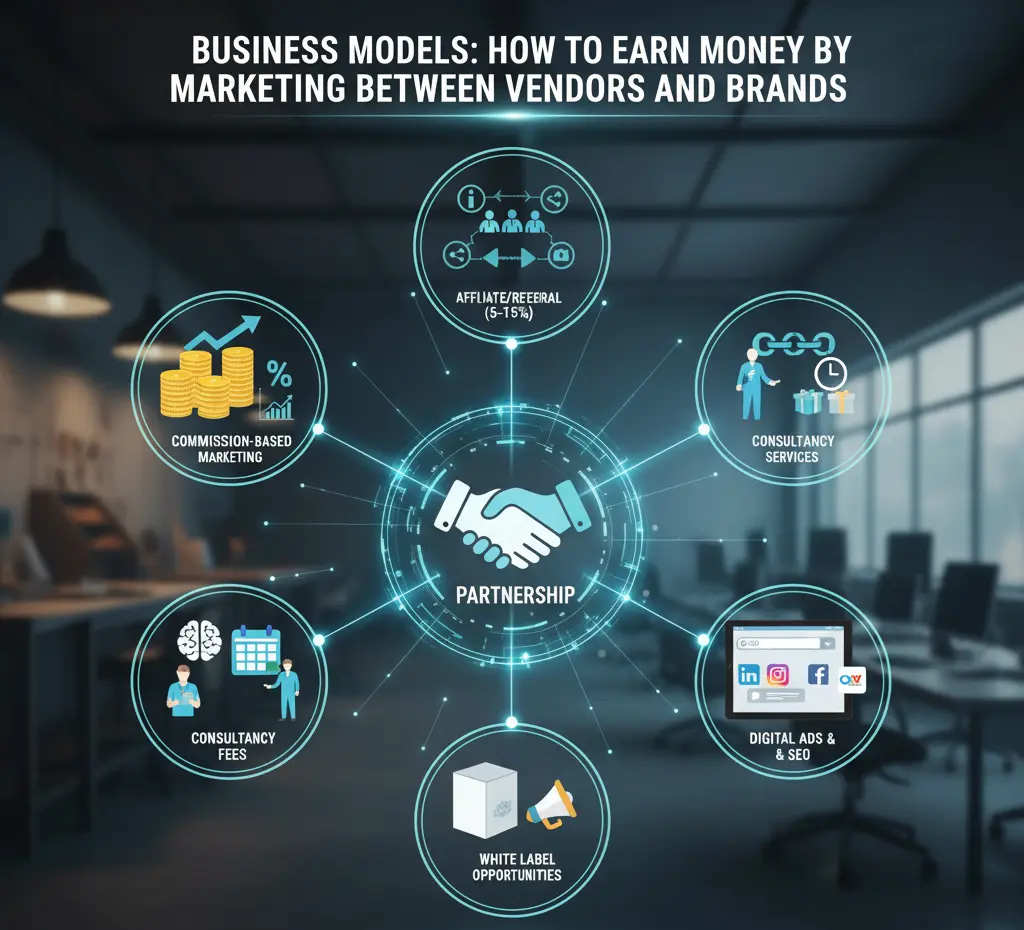
- Commission-based Marketing: Icon of stacked coins with a percentage sign.
- Affiliate/Referral Partnerships: Icon of interconnected people or a chain, with a small text “5-15%.”
- Consultancy Services: Icon of a person with a thought bubble or a lightbulb, representing expert advice.
- Digital Promotion: Icons of social media logos (LinkedIn, Instagram, Facebook, Google) and an ad symbol.
- White Label Opportunities: Icon of a blank product box with a megaphone or branding symbol.
The background should be a subtle, modern office setting. A clear title at the top: “BUSINESS MODELS: HOW TO EARN MONEY BY MARKETING BETWEEN VENDORS AND BRANDS” and a subtitle at the bottom: “CHOOSE YOUR PATH TO PROFITABLE PARTNERSHIPS.”**
5. Skills You Need to Succeed: Your Marketing Toolkit
To effectively navigate the landscape of vendors and brands, you’ll need a specific set of skills. Developing these will significantly enhance your ability to earn money by marketing between vendors and brands.
- Negotiation & Communication Skills: This is paramount. You’ll be the primary point of contact and negotiator for both parties. You need to clearly articulate value propositions, manage expectations, and mediate any disagreements. Strong written and verbal communication is essential for building trust and closing deals.
- Basic Digital Marketing Knowledge (SEO, Social Media, Email Marketing): Even if you’re not running full campaigns, understanding the basics of how products are found online is crucial. This helps you identify promising vendors, understand a brand’s target audience, and speak their language. Knowing how to leverage LinkedIn for B2B connections, or how to spot a vendor with good potential for Instagram exposure, is invaluable.
- Networking & Relationship-Building: Your success hinges on your network. Attend industry trade shows (online and offline), join B2B groups, and proactively connect with people on platforms like LinkedIn. Personal relationships are often the key to unlocking exclusive deals and gaining trust.
- Market Research (Finding Trending Products & Profitable Niches): You need an eye for what’s hot and what’s next. Staying updated on market trends, identifying underserved niches, and understanding consumer demand will allow you to pinpoint high-potential vendors and attractive opportunities for brands. Tools like Google Trends, Amazon Bestsellers, and industry reports can be your best friends.
Cultivating these skills will transform you from a simple go-between into a highly sought-after marketing strategist.
6. Step-by-Step Guide to Start: Your Action Plan
Ready to dive in? Here’s a practical, step-by-step guide to launch your venture and start realizing how to earn money by marketing between vendors and brands.
- Identify a Niche or Product Category: Don’t try to be everything to everyone. Specializing in a particular niche (e.g., sustainable fashion, artisanal foods, eco-friendly home goods, tech gadgets) allows you to build expertise and a targeted network more quickly.
- Build a List of Vendors: Start locally, or explore online platforms.
- Local Suppliers/Manufacturers: Search for craft fairs, farmers’ markets, local business directories, and small-batch producers.
- Online Manufacturers: Explore platforms like Alibaba (for larger scale), Etsy (for artisans), or specialized B2B directories. Focus on product quality, production capacity, and reliability.
- Find Potential Brands or Retailers in That Niche: Once you have potential vendors, research brands that would be a good fit. Look for retailers with a similar target audience, complementary product lines, or a stated interest in unique sourcing. LinkedIn, industry publications, and competitive analysis are excellent tools.
- Create a Compelling Marketing Pitch to Connect Them: Develop a clear, concise pitch that highlights the benefits for both the vendor and the brand.
- For the Brand: Focus on unique product features, competitive pricing, reliable supply, and how the vendor’s products align with their brand vision.
- For the Vendor: Emphasize the brand’s market reach, target audience alignment, and potential for increased sales and exposure.
- Negotiate Your Fee/Commission Clearly: This is critical. Before making introductions, have a clear agreement with at least one party (ideally both, or whoever is paying you) about your compensation structure. Get it in writing! Be transparent about your value.
- Use Digital Channels to Expand Your Reach:
- LinkedIn: Essential for B2B networking. Optimize your profile, connect with industry leaders, and share valuable content.
- B2B Platforms: Explore platforms designed for wholesale or supplier-buyer connections.
- Instagram/Pinterest: Visually driven platforms can be great for showcasing product potential, especially for consumer goods.
- Email Outreach: Develop targeted email campaigns to potential clients, always offering value first.
Following these steps systematically will put you firmly on the path to understanding how to earn money by marketing between vendors and brands

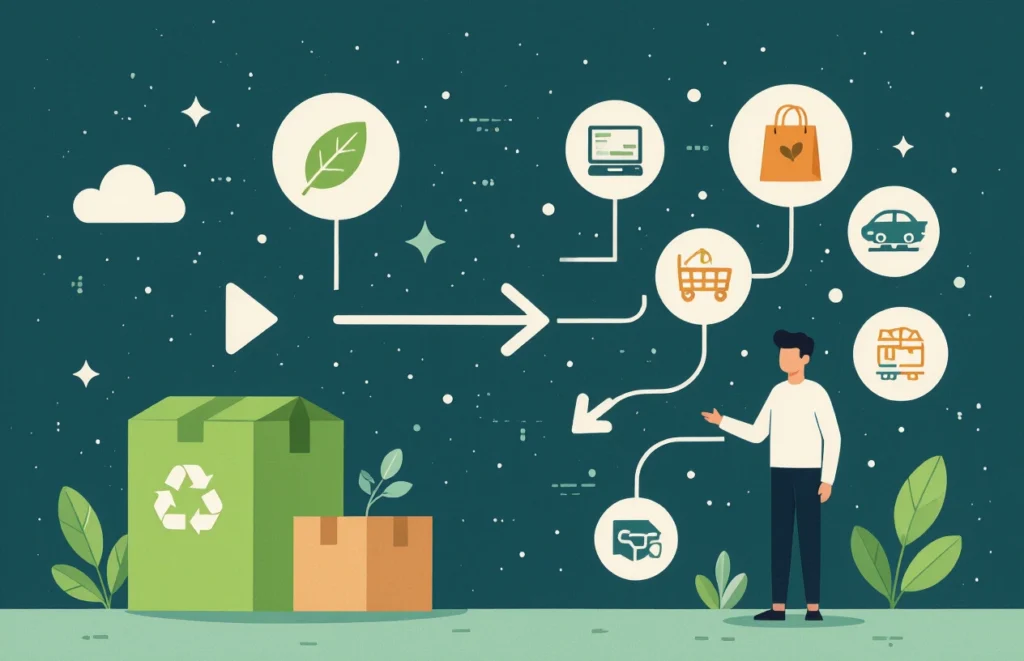
- Identify a Niche: Magnifying glass over different product icons.
- Build a Vendor List: Stack of papers/documents or a factory icon.
- Find Brands & Create Pitch: Shopping cart/e-commerce icon or a megaphone.
- Negotiate Your Fee: Handshake icon with money symbols.
- Use Digital Channels: Icons of social media platforms (LinkedIn, Instagram) and an email symbol.
- Expand Reach: Global network or growth arrow icon.
The entrepreneur is engaged with the visual, perhaps indicating a presentation or a planning session. The overall feel is modern and actionable.**
7. Real-Life Examples / Case Studies: Inspiration in Action
Seeing how others have succeeded can illuminate how to earn money by marketing between vendors and brands in practical terms.
- Connecting Textile Vendors with Clothing Brands: A freelancer specializing in sustainable fashion recognized a gap: small, ethical textile producers struggled to get their unique fabrics into the hands of larger clothing brands. The freelancer built a portfolio of these vendors, showcasing their sustainable practices and fabric quality. They then pitched these vendors to mid-sized clothing brands looking to enhance their ethical sourcing. By facilitating successful partnerships, the freelancer earned a percentage of each fabric order, building a reputation as a trusted textile broker.
- Linking Local Food Suppliers with Restaurants: A marketer passionate about local cuisine connected small-batch farmers and artisan food producers with farm-to-table restaurants and catering companies. They understood the needs of chefs for fresh, seasonal ingredients and the farmers’ desire for consistent buyers. Through local networking and a robust online directory of vetted suppliers, this marketer facilitated numerous deals, earning a commission on ongoing supply agreements.
- Digital Marketers Attracting E-commerce Sellers for Vendors: A digital marketing agency identified that many high-quality product vendors lacked the online presence to attract e-commerce brands. The agency offered specialized B2B digital marketing services to these vendors, running targeted LinkedIn ad campaigns, optimizing their online catalogs for search engines, and developing compelling case studies. Their success was measured by the number of new e-commerce brand partnerships the vendors secured, and the agency charged a retainer plus performance bonuses.
These examples demonstrate the versatility and profitability of this business model across various industries.
8. Challenges and How to Overcome Them: Navigating the Hurdles
While highly rewarding, marketing between vendors and brands does present challenges. Knowing how to earn money by marketing between vendors and brands also means knowing how to overcome potential roadblocks.
- Trust Issues Between Vendors and Brands:
- Challenge: Brands might be wary of new, unproven vendors, and vendors might fear exploitation by larger brands.
- Solution: Act as a neutral, trusted third party. Thoroughly vet both sides. Provide references, case studies, and transparent communication. Emphasize your role in ensuring fair deals and long-term relationships. Building a strong reputation for integrity is paramount.
- Payment Delays or Low Commissions:
- Challenge: Initial commissions might be small, or payments could be slow, especially with new partnerships.
- Solution: Negotiate clear payment terms upfront, with specific timelines. Consider staggered payments or upfront retainers for initial work. Focus on deals that offer recurring commissions or long-term value. Don’t be afraid to walk away from deals that don’t value your time and expertise appropriately.
- Market Saturation in Common Niches:
- Challenge: Highly popular niches (e.g., fast fashion accessories, generic tech gadgets) can be crowded with intermediaries.
- Solution: Focus on niche markets within niches. Instead of “fashion,” try “sustainable alpaca wool knitwear.” Or “handmade ethical jewelry from specific regions.” Deep specialization reduces competition and allows you to become the go-to expert. Continuous market research will help you identify these emerging opportunities.
9. Future Opportunities: The Horizon of Possibility
The landscape for marketing between vendors and brands is constantly evolving, presenting exciting new avenues for growth. Understanding these future trends will help you strategically plan how to earn money by marketing between vendors and brands for years to come.
- Growth of Influencer-Driven Product Marketing: Influencers are increasingly becoming brands themselves or launching their own product lines. You can connect niche vendors directly with influencers looking to co-create or white-label products, cutting out traditional retailers.
- AI and Data-Driven Vendor-Brand Matchmaking: As AI tools become more sophisticated, they can analyze vast amounts of data to match vendors with brands based on product attributes, market trends, consumer demographics, and logistical capabilities. Learning to leverage these tools will give you a significant advantage.
- Cross-Border Opportunities: The global marketplace is shrinking. There’s immense potential in connecting vendors in one country with brands abroad, navigating international logistics, customs, and cultural differences to open up new markets for both parties. This requires specialized knowledge but offers high rewards.
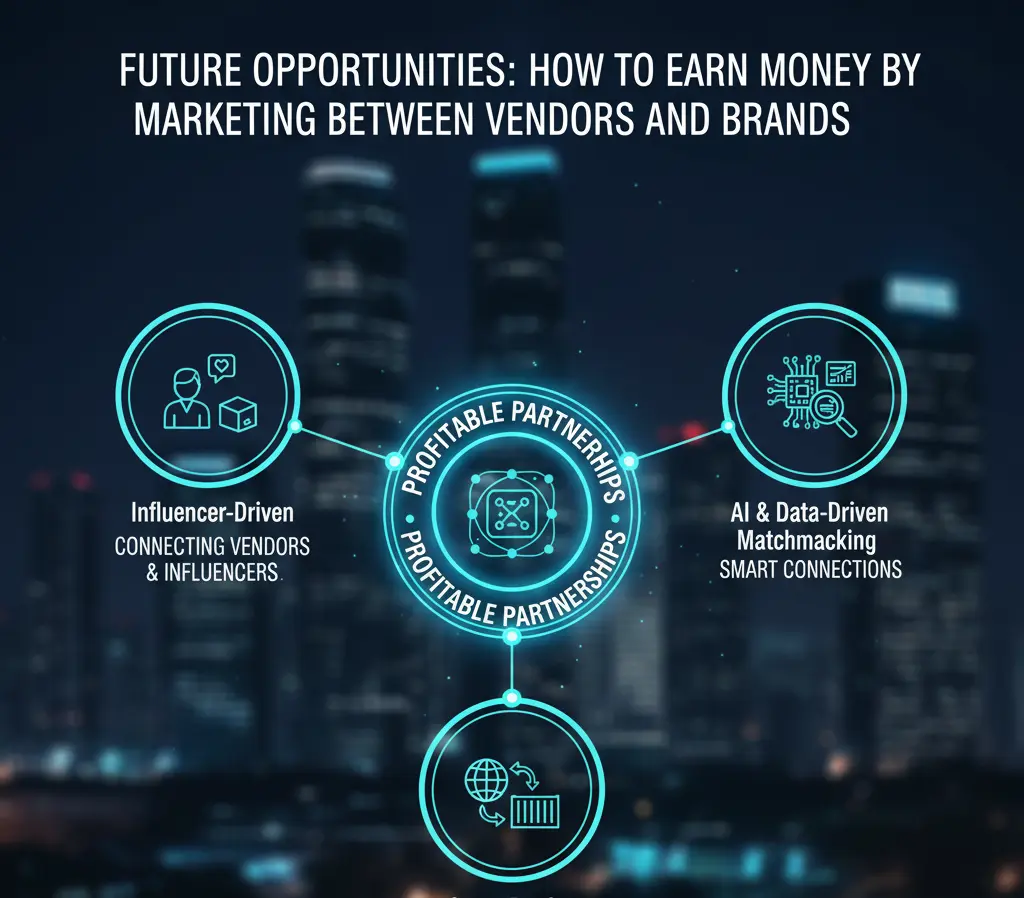
Radiating from the center are three distinct circular nodes:
- Influencer-Driven Product Marketing: Icon of a person with a heart/like symbol and a product box, text label “CONNECTING VENDORS & INFLUENCERS.”
- AI and Data-Driven Matchmaking: Icon of a magnifying glass over circuit board patterns or data visualization, text label “SMART CONNECTIONS.”
- Cross-Border Opportunities: Icon of a globe with arrows or shipping containers, text label “GLOBAL REACH.”
The overall aesthetic should be forward-looking and digitally enhanced. A clear title at the top: “FUTURE OPPORTUNITIES: HOW TO EARN MONEY BY MARKETING BETWEEN VENDORS AND BRANDS.”**
10. Conclusion: Build Profitable Partnerships, Build Your Income
You now have a comprehensive understanding of how to earn money by marketing between vendors and brands. This isn’t just about selling; it’s about strategically facilitating powerful connections that drive growth for all parties involved. The income potential is significant, especially as you build a reputation and secure ongoing partnerships.
Don’t be intimidated by the scope; start small. Choose a niche you’re passionate about, connect with a few local vendors, and identify one or two potential brands. Each successful connection builds your experience, your network, and your confidence. This is not merely marketing; it’s the art of building profitable, sustainable partnerships in a world hungry for unique products and reliable suppliers. Your journey to becoming an indispensable marketing bridge starts now!